 RisingStar
- Home
- About Us
- Products
- News
- Video
- Contact
- Send Inquiry
Search
- Home
- About Us
- Products
- News
- Video
- Contact
- Send Inquiry
RisingStar
High-brightness sunlight-readable LCD displays are essential components in modern outdoor electronics, especially in military, transportation, industrial automation, and medical equipment applications where visibility under direct sunlight is critical. These displays typically operate at brightness levels of 5,000 to 10,000 nits—far exceeding the standard 250–350 nits found in consumer-grade screens—ensuring readability even under intense solar irradiance. According to the Society for Information Display (SID), such displays have become increasingly standardized across defense and aerospace sectors due to their reliability and performance in extreme conditions.
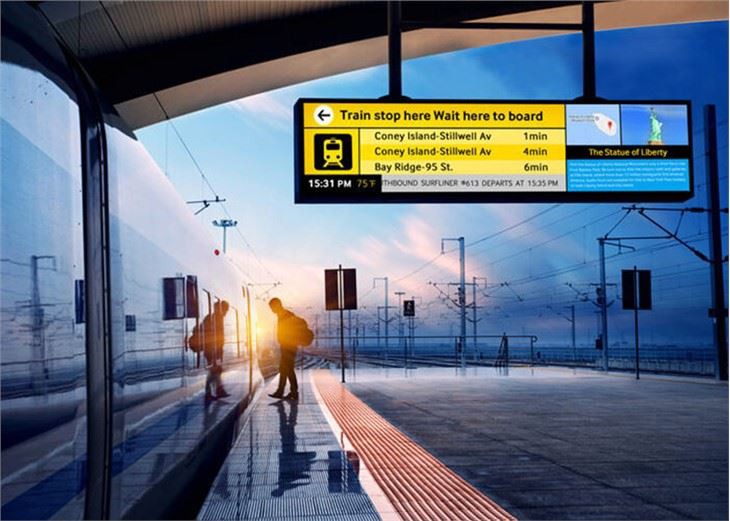
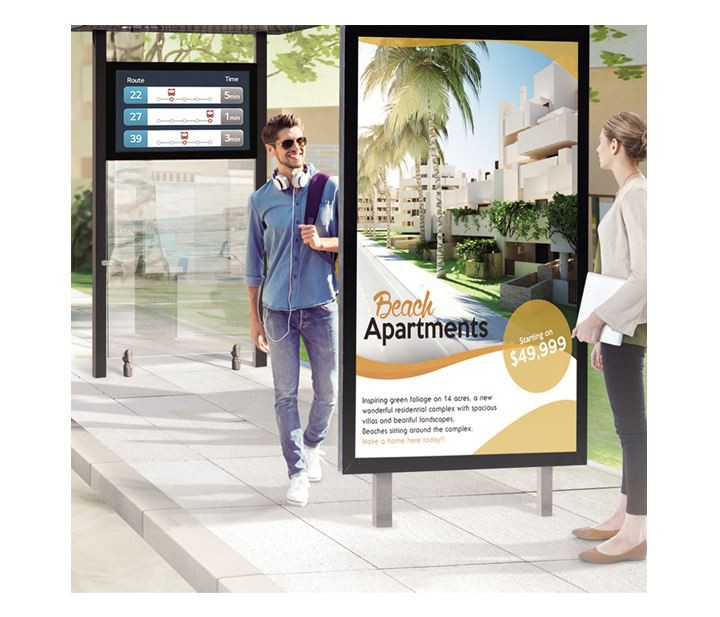
One of the most practical applications is in military field operations. For instance, the U.S. Army’s M1 Abrams tank uses high-brightness LCDs in its command-and-control systems to maintain situational awareness during daylight combat. Similarly, in aviation, pilots rely on sunlight-readable displays in cockpits to read flight data, navigation maps, and radar information without glare distortion. In commercial settings, public transportation systems such as buses and trains utilize these displays for real-time route updates, ticketing interfaces, and passenger information systems—all operating reliably under variable weather conditions.
Advantages of high-brightness sunlight-readable LCDs include superior contrast ratios (often 10,000:1 or higher), wide viewing angles (up to 178°), and compatibility with ruggedized enclosures that resist dust, water, and shock. They also support advanced technologies like IPS (In-Plane Switching) panels for consistent color accuracy and low power consumption through adaptive backlighting systems. Industry leaders like LG Display, Sharp, and AU Optronics now offer factory-integrated solutions that combine optical bonding, anti-reflective coatings, and high-efficiency LEDs to reduce ambient light interference.
However, common problems persist. Overheating remains a challenge in hot climates, necessitating thermal management strategies such as heat sinks and active cooling fans. Additionally, prolonged exposure to UV radiation can degrade polarizing films and cause color shift over time—a known issue addressed by using UV-stable materials in newer display models. Manufacturers are responding with innovations like OLED-based sunlight-readable displays, which offer self-emissive pixels that eliminate the need for a separate backlight and thus reduce power draw while improving contrast.
The latest trend involves integrating AI-driven brightness adjustment algorithms. Companies like Samsung and Bosch are embedding machine learning models into embedded controllers to dynamically optimize screen luminance based on real-time environmental lighting conditions—saving energy while maintaining optimal visibility. Furthermore, the adoption of flexible and transparent OLEDs in high-brightness applications promises future breakthroughs in wearable tech, smart helmets, and augmented reality headsets used in outdoor environments.
These advancements reflect an industry-wide commitment to enhancing user experience, durability, and energy efficiency—driving innovation in both hardware design and software optimization for demanding outdoor use cases.