 RisingStar
- Home
- About Us
- Products
- News
- Video
- Contact
- Send Inquiry
Search
- Home
- About Us
- Products
- News
- Video
- Contact
- Send Inquiry
RisingStar
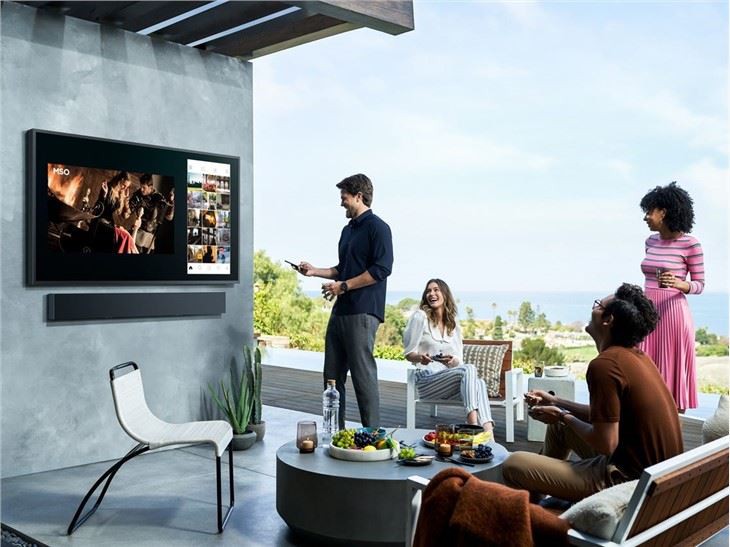
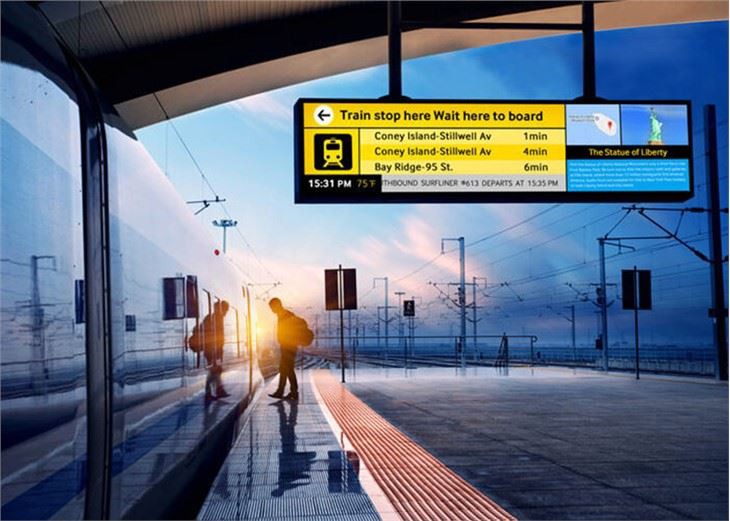
High-brightness sunlight-readable LCD displays have become indispensable in modern industrial, military, and transportation environments where visibility under direct sunlight is critical. Unlike standard LCDs that suffer from poor contrast and washed-out images in bright outdoor conditions, these specialized screens are engineered to maintain readability even at intensities exceeding 100,000 lux—typical of midday sun exposure. According to the International Commission on Illumination (CIE), typical daylight brightness ranges from 10,000 to 100,000 lux, making high-brightness LCDs essential for reliable operation in outdoor settings such as construction sites, agricultural machinery, maritime navigation systems, and public transit information kiosks.
The core technology behind sunlight-readable LCDs lies in their ability to boost luminance through a combination of high-efficiency backlighting, advanced polarizer designs, and anti-reflective coatings. For instance, many industrial-grade displays now use LED backlights with brightness levels ranging from 3,000 to 10,000 cd/m²—up to ten times brighter than consumer-grade panels. These are often paired with transflective liquid crystal layers that combine reflective and transmissive modes, allowing optimal performance both indoors and outdoors without sacrificing power efficiency. A case study by Sharp Corporation demonstrated that their transflective LCD modules reduced power consumption by up to 40% while maintaining full readability under 100,000 lux conditions—a key advantage for battery-powered devices like handheld field equipment or mobile command units.
Moreover, manufacturers increasingly integrate active contrast enhancement algorithms, which dynamically adjust pixel-level illumination based on ambient light sensors. This adaptive brightness control ensures not only readability but also energy savings and extended display lifespan. Standards such as MIL-STD-810G (for military durability) and ISO 16750-3 (for automotive electronics) further validate the robustness of these displays against temperature extremes, vibration, shock, and humidity—ensuring they meet rigorous environmental requirements.
From an engineering perspective, selecting the right high-brightness LCD involves evaluating several parameters: peak brightness (measured in nits), viewing angle, color accuracy under UV exposure, and long-term reliability under continuous operation. Leading vendors like LG Display, AU Optronics, and Panasonic provide detailed datasheets and application-specific recommendations for industries including defense, agriculture, and smart city infrastructure. In one notable example, a solar-powered weather station in the Sahara Desert utilized a 5,000-nit sunlight-readable display from Innolux, enabling real-time data visualization despite extreme heat and intense solar radiation—an achievement verified by independent testing conducted at the National Renewable Energy Laboratory (NREL).

In conclusion, high-brightness sunlight-readable LCDs are no longer optional—they are mission-critical components in today’s connected world. Their ability to deliver clear, stable visuals across diverse lighting conditions makes them ideal for safety-sensitive applications where human-machine interface clarity can directly impact operational outcomes. As global demand grows for resilient, low-power, and durable outdoor interfaces—from autonomous vehicles to remote monitoring stations—investing in proven high-brightness LCD technologies remains a strategic imperative for engineers, procurement managers, and product designers alike.